The global shift toward Net Zero emissions is driving a fundamental transformation in engineering systems, requiring them to be more energy-efficient, intelligent, and sustainable. Fluid power systems, particularly hydraulics, remain indispensable in mobile machinery due to their high force density, reliability, and robustness. However, their inherently low efficiency and high maintenance requirements pose challenges for meeting sustainability targets. Despite their strengths, conventional hydraulic systems suffer from inefficiencies, high energy losses, and maintenance-intensive operation, limiting their effectiveness in a sustainability-driven landscape.
This article explores how the integration of Artificial Intelligence (AI), digitalization, and advanced control strategies is transforming hydraulic systems into intelligent, adaptive, and energy-efficient platforms. With a strong emphasis on energy recuperation, predictive maintenance, digital twins, and smart control, the discussion outlines a roadmap for achieving sustainable asset lifespans in mobile machinery, aligned with emerging research on advanced fluid power systems.
Introduction: Reimagining Hydraulics in the Net Zero Era
Consider an illustrative scenario in a coal mining operation in India, where a 20-tonne electric-hydraulic continuously adjusts its pump swashplate angle 500 times per second. This is not governed by a fixed control map, but by a learning-based control system that predicted the next three digging cycles using inputs such as bucket penetration resistance, temperature, and fluid viscosity. The result? significant energy savings, extended oil life, and near-zero unplanned downtime.
This is not a distant vision; it represents the evolving reality of modern mobile machinery. At the intersection of Artificial Intelligence and fluid power engineering lies a transformative pathway toward Net Zero operations and sustainable asset life.
For decades, hydraulics has been defined by its high-power density, robustness, and precise controllability. These attributes have made hydraulic systems indispensable across industries such as mining, construction, agriculture, and material handling. Their ability to generate high forces within compact configurations ensures their continued relevance in heavy-duty applications where alternative technologies fall short.
However, as industries accelerate toward global sustainability targets for 2030-2050, a fundamental challenge emerges. Hydraulic systems, while essential, are inherently energy-intensive. Conventional designs often face several challenges, including low overall energy efficiency (typically 20-40%), throttling losses, poor heat dissipation, suboptimal control, and environmental concerns due to oil leakage, leading to increased energy consumption and reduced system performance over time. These inefficiencies not only increase operational costs but also contribute to higher carbon emissions.
This creates a critical paradox: how to retain the unmatched capabilities of hydraulics while aligning them with sustainability and Net Zero goals. The answer does not lie in replacing hydraulics, but in transforming them. The integration of digital technologies, Artificial Intelligence, and advanced control systems is redefining fluid power engineering. By enabling real-time optimization, predictive decision-making, and adaptive control, these technologies are transforming conventional hydraulic systems into intelligent, efficient, and self-optimizing platforms.[1][2]
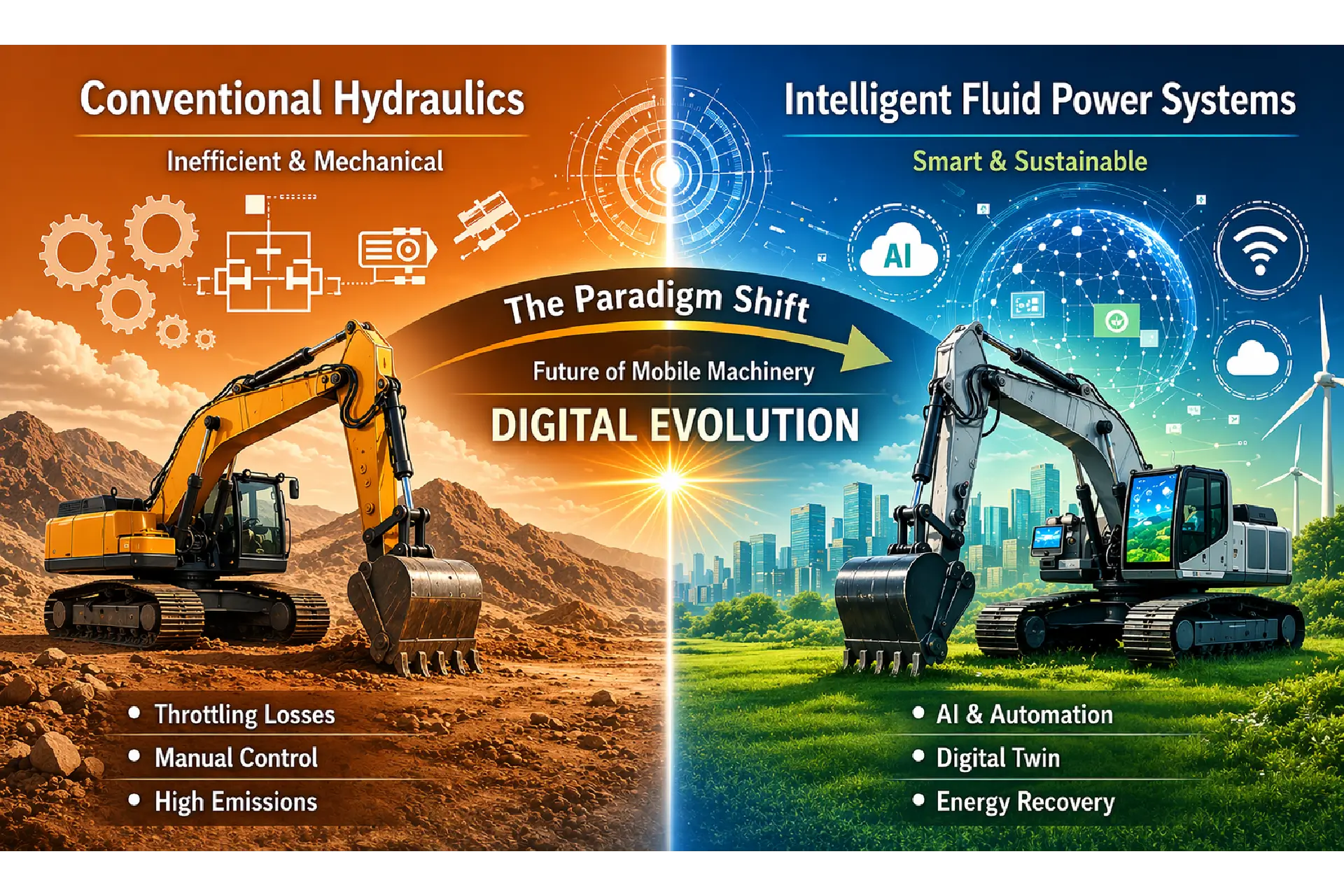
This paradigm shift, from conventional hydraulics to digitized, intelligent, and autonomous fluid power systems, marks the beginning of a new era in mobile machinery, where performance and sustainability are no longer competing objectives but complementary outcomes. This transition is conceptually illustrated in Fig. 1, which contrasts conventional hydraulic systems with emerging intelligent fluid power architectures and highlights the shift from energy-intensive operation to smart, sustainable performance.
Sustainability Challenges in Fluid Power Systems
- Energy Losses in Conventional Hydraulics: The Hidden Energy Drain
At the core of the sustainability issue lies the way energy is generated, controlled, and dissipated in traditional hydraulic systems. Most systems operate on fixed or semi-adaptive control logic, which limits their ability to respond efficiently to varying load demands.
In practice, this results in multiple layers of energy loss:
- Throttling Losses: Flow control through valves results in excess energy being dissipated as heat rather than performing useful work. This is one of the most dominant sources of inefficiency.
- Pump Inefficiencies: Pumps often run at constant speed or maximum capacity, regardless of actual demand. This mismatch between supply and demand leads to unnecessary energy consumption.
- Oversupply of Flow: Systems are typically designed conservatively, resulting in oversized pumps that deliver more flow than required, further increasing throttling losses.
- Leakage and Wear: Over time, internal leakage in pumps, valves, and actuators increases due to wear, reducing volumetric efficiency and overall system performance.
- Thermal Losses and Cooling Demand: Energy lost as heat not only reduces efficiency but also necessitates additional cooling systems, which themselves consume power.
Collectively, these factors limit the overall efficiency of conventional hydraulic systems to approximately 30-40%, making them inherently unsustainable in a Net Zero context. Fig. 2 illustrates the distribution of energy losses across key hydraulic components, emphasizing the dominant role of throttling and thermal dissipation.
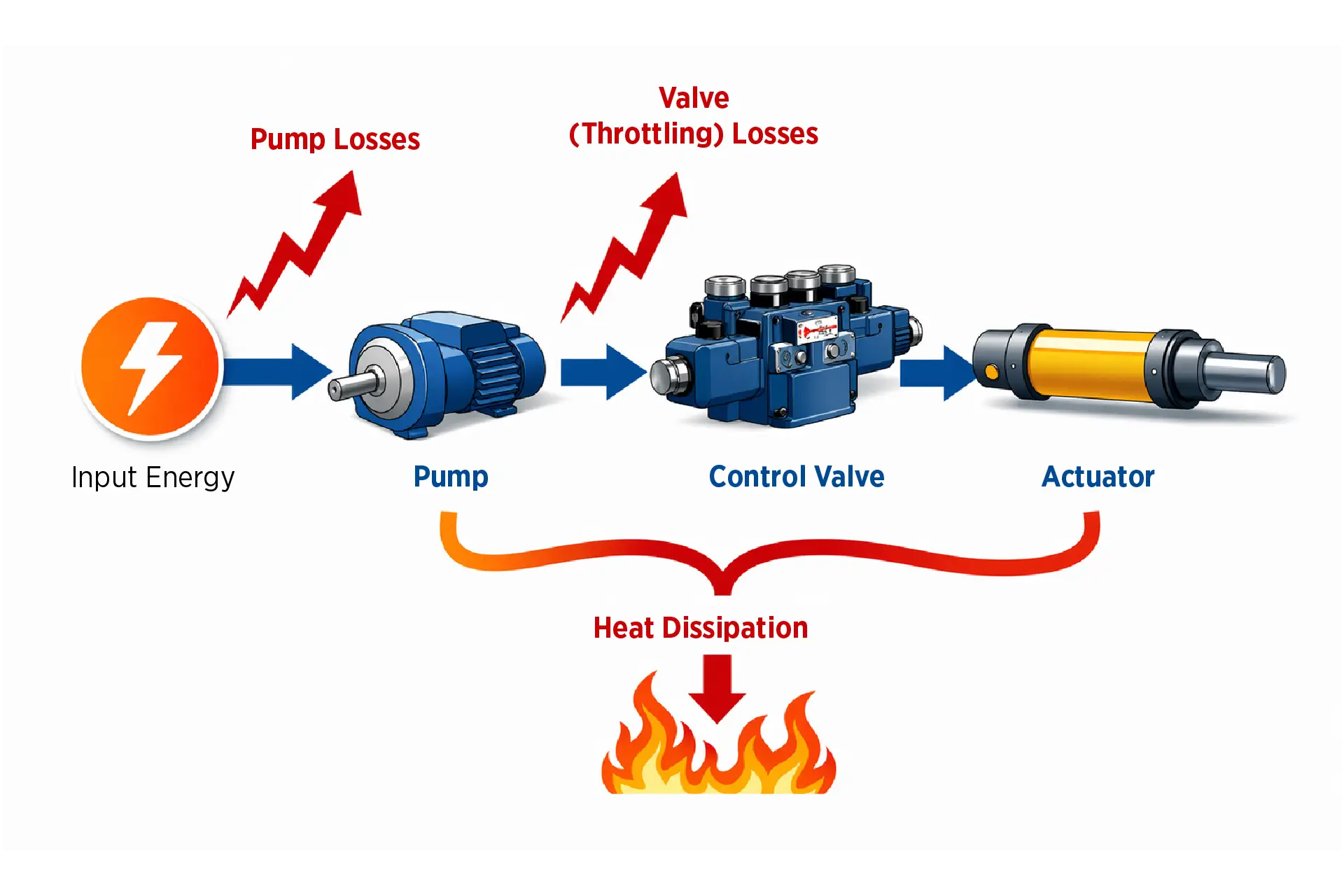
This highlights how a significant portion of input energy is lost before contributing to productive work.
- Environmental Concerns
Beyond energy inefficiency, hydraulic systems also pose direct environmental challenges that are increasingly under regulatory scrutiny.
- Oil Lifecycle Management Issues: Frequent replacement of hydraulic fluids generates disposal challenges and adds to the environmental burden.
- Fluid Leakage and Contamination: Hydraulic oil leakage can contaminate soil and groundwater, particularly in mining and construction environments.
- High Carbon Footprint: Inefficient energy usage translates directly into higher fuel consumption and increased greenhouse gas emissions.
These factors position conventional hydraulics as a significant contributor to environmental degradation, underscoring the need for cleaner, more efficient alternatives.
- Maintenance and Reliability Constraints
Reliability is another critical dimension where traditional systems fall short, directly affecting both operational efficiency and asset sustainability.
- High Lifecycle Costs: Frequent maintenance, part replacements, and downtime collectively increase the total cost of ownership.
- Component Wear and Degradation: Continuous exposure to high pressures and temperatures accelerates wear in pumps, valves, and actuators.
- Unplanned Downtime: Lack of predictive capability often leads to sudden failures, disrupting operations and increasing costs.
Taken together, these challenges highlight a fundamental limitation: conventional hydraulic systems are energy-intensive, maintenance-heavy, and environmentally demanding.
For industry leaders, addressing these issues is not just about improving efficiency; it is about redefining hydraulic systems as sustainable, intelligent assets that align with long-term operational and environmental goals.
Digitalisation: The Foundation of Intelligent Hydraulics
Digitalisation is transforming hydraulic systems into intelligent, data-driven, and interconnected platforms capable of adaptive operation. By integrating IoT-based sensors and edge computing, these systems enable continuous data acquisition and seamless transmission to cloud environments for advanced analytics. For example, electro-hydraulic actuators are increasingly replacing conventional mechanical linkages, facilitating software-defined control loops with response times below 10 ms.[2][3]
The key elements of digitalisation in hydraulic systems typically include: Sensor Integration and Data Acquisition, IoT-Enabled Hydraulic Systems, and Digital Twin Technology.
- Sensor Integration and Data Acquisition
Modern hydraulic systems are increasingly embedded with sensors that continuously monitor operating parameters such as pressure, flow rate, temperature, and vibration. These sensors provide high-resolution data that reflects the system's real-time health and performance.
Instead of relying on periodic inspections, engineers can now continuously observe system behaviour, enabling early detection of inefficiencies and faults.
- IoT-Enabled Hydraulic Systems
With IoT integration, hydraulic systems have evolved from standalone units into components of a connected digital ecosystem. Real-time data from sensors (pressure, flow, temperature, vibration) is transmitted to cloud platforms, enabling remote monitoring, diagnostics, and informed decision-making.
In industries such as mining, this connectivity enables fleet-level optimisation, significantly improving operational efficiency across multiple machines.
Leveraging this data, AI techniques like machine learning and neural networks dynamically optimise system parameters, including pump displacement and valve settings. Adaptive approaches, such as reinforcement learning, further enhance performance by learning load patterns and reducing inefficiencies, such as over-pressurisation during idle conditions.
These intelligent control strategies can deliver energy savings of 15-25%.[1][4] A 20% efficiency improvement in a 200 kW excavator operating 1500 hours annually can reduce CO2 emissions by approximately 50 tons per machine.[5]
The progressive impact of advanced hydraulic architectures, from conventional systems to AI-integrated solutions, on overall system efficiency is illustrated in Fig. 3.
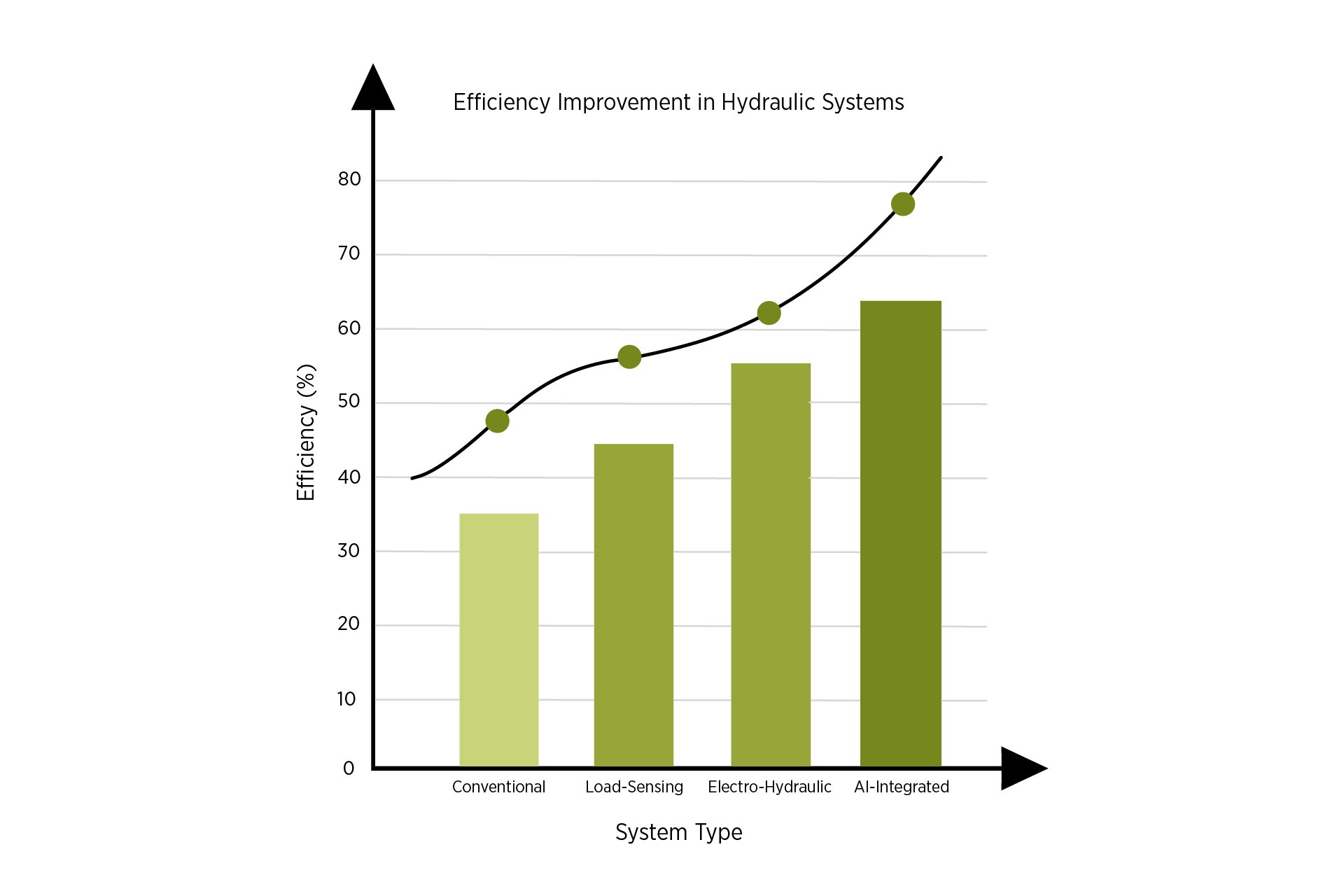
The stepwise improvement underscores the cumulative benefits of integrating sensing, control, and intelligence into hydraulic systems, transforming them from energy-intensive units to optimized, adaptive platforms.
- Digital Twin Technology
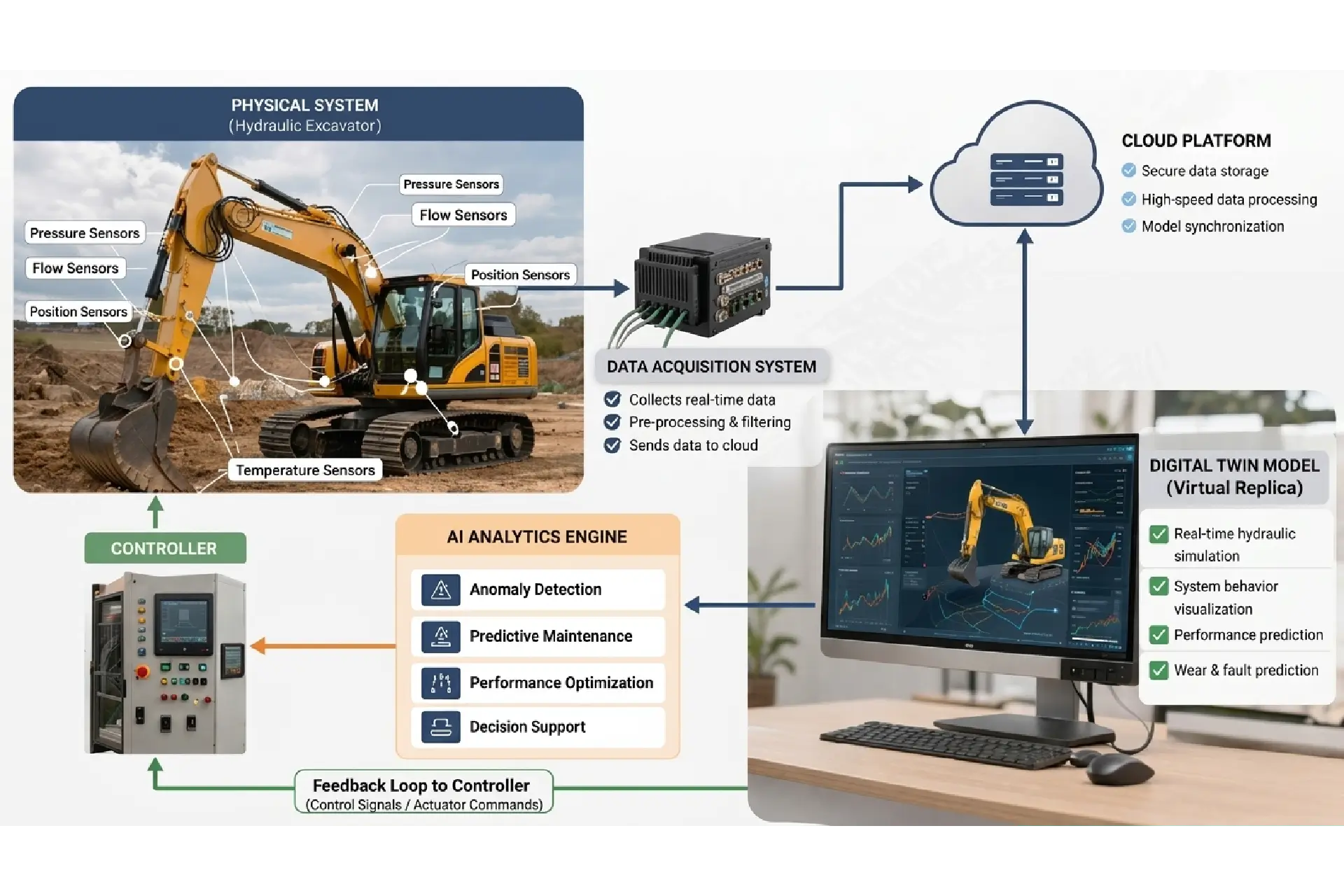
Digital twin technology refers to a virtual representation of a physical hydraulic system that continuously evolves using real-time sensor data. It enables engineers to simulate operating conditions, analyse system behaviour, and optimise performance without disrupting actual operations.
Initially applied for design validation, digital twins now support advanced “what-if” simulations, allowing engineers to refine system configurations and control strategies before physical prototyping. This approach is particularly relevant to fluid power systems, where accurate modelling of fluid dynamics and component interactions is critical.
Building on this capability, digital twins are increasingly integrated with advanced system modelling and energy-recuperative hydraulic architectures, enhancing both design efficiency and operational intelligence. They can also predict wear and performance degradation, contributing to extended service intervals, typically by 25-40%.[6][7]
The integrated digital twin framework for hydraulic systems is illustrated in Fig. 4, highlighting the interaction between physical assets, data acquisition, cloud analytics, and AI-driven decision-making.
AI-Driven Control Systems in Hydraulics
Artificial Intelligence introduces a paradigm shift from static control to adaptive and predictive control. Traditional controllers operate based on predefined parameters. In contrast, AI-based systems learn from historical and real-time data, continuously improving system performance.
For example, in a hydraulic excavator, AI can optimize the coordination between boom, arm, and bucket movements, reducing unnecessary energy consumption while maintaining productivity.
- Adaptive Control
AI enables controllers to adjust system parameters dynamically based on load conditions. This ensures that the system operates at optimal efficiency across varying operating scenarios.
- Reinforcement Learning Applications
Reinforcement learning allows machines to “learn by doing.” By interacting with the system environment, AI models identify control strategies that minimize energy consumption while maximizing output.
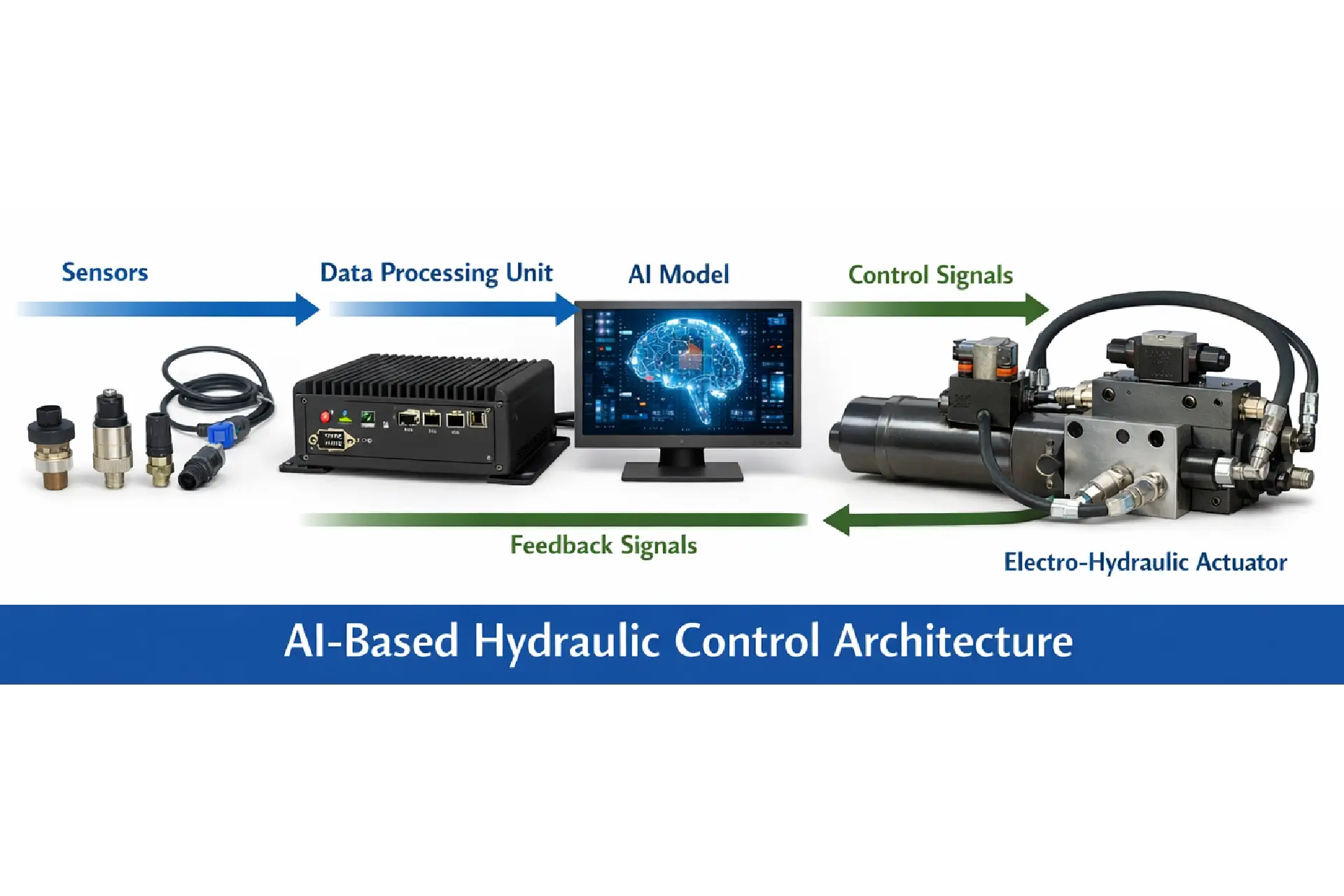
The overall architecture of an AI-based hydraulic control system, incorporating sensors, data processing, reinforcement learning models, and actuator feedback loops, is illustrated in Fig. 5.
Energy Recuperation: A Key Enabler for Sustainability
Energy recuperation has emerged as one of the most effective strategies for enhancing the efficiency and sustainability of hydraulic systems, particularly in heavy-duty applications such as excavators. This approach is closely aligned with ongoing advancements in fluid power engineering aimed at minimizing energy losses, improving system responsiveness, and reducing environmental impact.
In conventional hydraulic systems, a substantial portion of energy generated during deceleration or load-lowering operations is dissipated as heat through throttling or control valves. The associated power loss can be expressed as:
Ploss = Δp⋅Q
where Δp is the pressure drop across the valve, and Q is the flow rate. This inherent inefficiency not only reduces overall system performance but also increases thermal loading, necessitating larger cooling capacities and contributing to higher fuel consumption.
Energy recuperation systems overcome this limitation by capturing the otherwise wasted energy and storing it for subsequent reuse, thereby significantly improving energy utilization and operational efficiency.
- Working Principle and System Operation
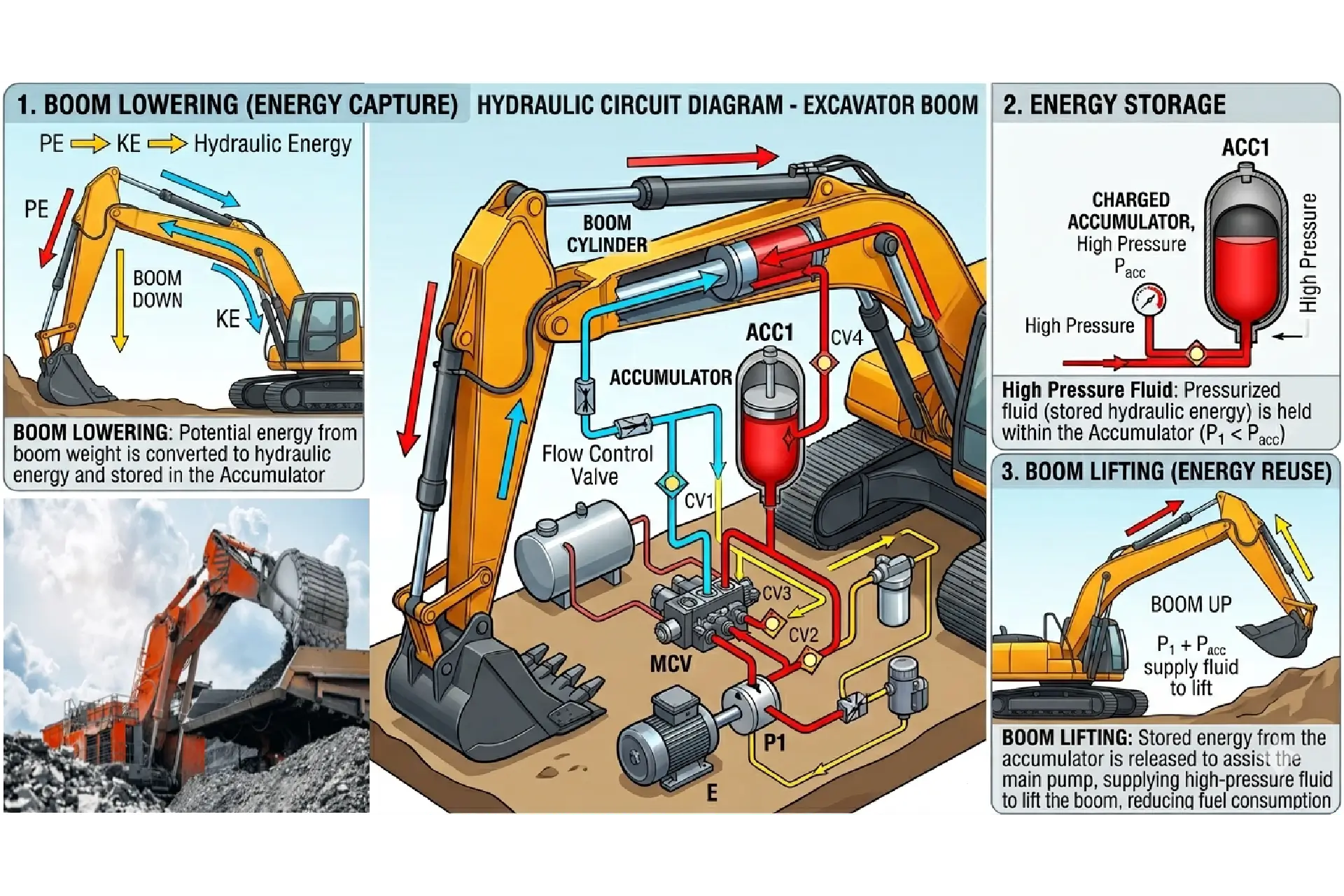
The working principle of an energy-recuperative hydraulic system can be understood through the integrated operation of the circuit, as illustrated in Fig. 5. The process involves a continuous cycle of energy conversion, storage, and reuse, occurring across three functionally distinct yet interconnected phases:
- Energy Capture during Boom Lowering - During boom lowering, the gravitational potential energy of the excavator arm is converted into hydraulic energy as the actuator retracts under load:
Epotential = mgh
This energy is transformed into hydraulic power:
Phydraulic = p⋅Q
In conventional systems, this energy is dissipated across control valves. However, in an energy-recuperative configuration, the generated hydraulic energy is redirected through appropriate control elements and stored in a gas-charged (typically nitrogen-filled) accumulator for future use.
- Energy Storage in the Accumulator - The captured energy is stored in a gas-charged accumulator in the form of pressurized fluid. The storage process follows a polytropic compression relation:
pVn = constant
where n depends on the thermodynamic process (typically between 1 and 1.4).
The energy stored between two pressure states can be approximated as:
Eaccumulator∝p.V
The gas within the accumulator compresses as the incoming fluid enters, effectively storing energy with minimal losses. This phase acts as an energy buffer, storing pressurized fluid with minimal losses and eliminating unnecessary heat generation.
- Energy Reuse during Boom Lifting - During lifting, the stored energy released from the accumulator combines with the pump output. The total flow supplied to the actuator becomes:
Qtotal = Qpump + Qaccumulator
Consequently, the required pump power reduces to:
Ppump = p. (Qtotal + Qactual)
This reduces the load on the prime mover, leading to improved fuel efficiency, lower emissions, and enhanced system responsiveness.
Key Insight
Energy recuperation transforms a conventional hydraulic system from a dissipative to a partially regenerative system. Its implementation offers several tangible benefits:
- Reduction in energy losses by recovering hydraulic energy otherwise dissipated as heat.
- Lower fuel consumption due to reduced demand on the prime mover.
- Decreased thermal loading, minimizing cooling requirements and improving component life.
- Enhanced overall system efficiency and dynamic performance.
Engineering Perspective
The effectiveness of energy recuperation critically depends on pressure matching between the accumulator and the load: pacc ≈ pload
Proper system design ensures that the recovered energy can be effectively reused without causing instability or flow mismatch. This approach can significantly improve system efficiency and reduce fuel consumption, directly contributing to Net Zero objectives.
The detailed hydraulic circuit configuration and the sequence of energy capture, storage, and reuse during boom operation are illustrated in Fig. 6, highlighting the interactions among system components and the flow paths across different operating phases.
Predictive Maintenance and Reliability Enhancement
Hydraulic system maintenance is rapidly shifting from reactive practices to predictive, data-driven strategies. Enabled by advances in sensing and artificial intelligence (AI), modern systems continuously monitor parameters such as pressure, vibration, flow, and temperature to assess equipment health in real time. AI-based algorithms analyse these signals to detect subtle deviations, often imperceptible during routine inspection, that indicate early-stage wear in critical components like pumps, valves, and actuators. For instance, minor pressure oscillations or changes in vibration signatures can serve as reliable precursors to failure.
Unlike conventional time-based approaches, predictive maintenance enables condition-based intervention, ensuring that maintenance is performed precisely when required. This prevents unexpected breakdowns while avoiding unnecessary servicing.
Case Illustration: Hydraulic Excavator
Consider a hydraulic excavator operating under cyclic loading conditions. Sensors installed on the main pump and control valves continuously record pressure and vibration data during digging and boom actuation.
Over time, the AI monitoring system detects a gradual increase in pressure ripple amplitude along with a shift in vibration frequency. While these variations remain within permissible limits, pattern recognition models identify them as signatures of incipient pump wear.
Instead of waiting for performance degradation or failure, the system flags a maintenance alert. The pump is inspected and serviced during a scheduled downtime window, avoiding a potential in-field breakdown that could have led to costly repairs and operational delays. This improvement in reliability can be quantitatively interpreted through the progressive reduction in failure probability achieved through predictive maintenance, as illustrated in Fig. 7.
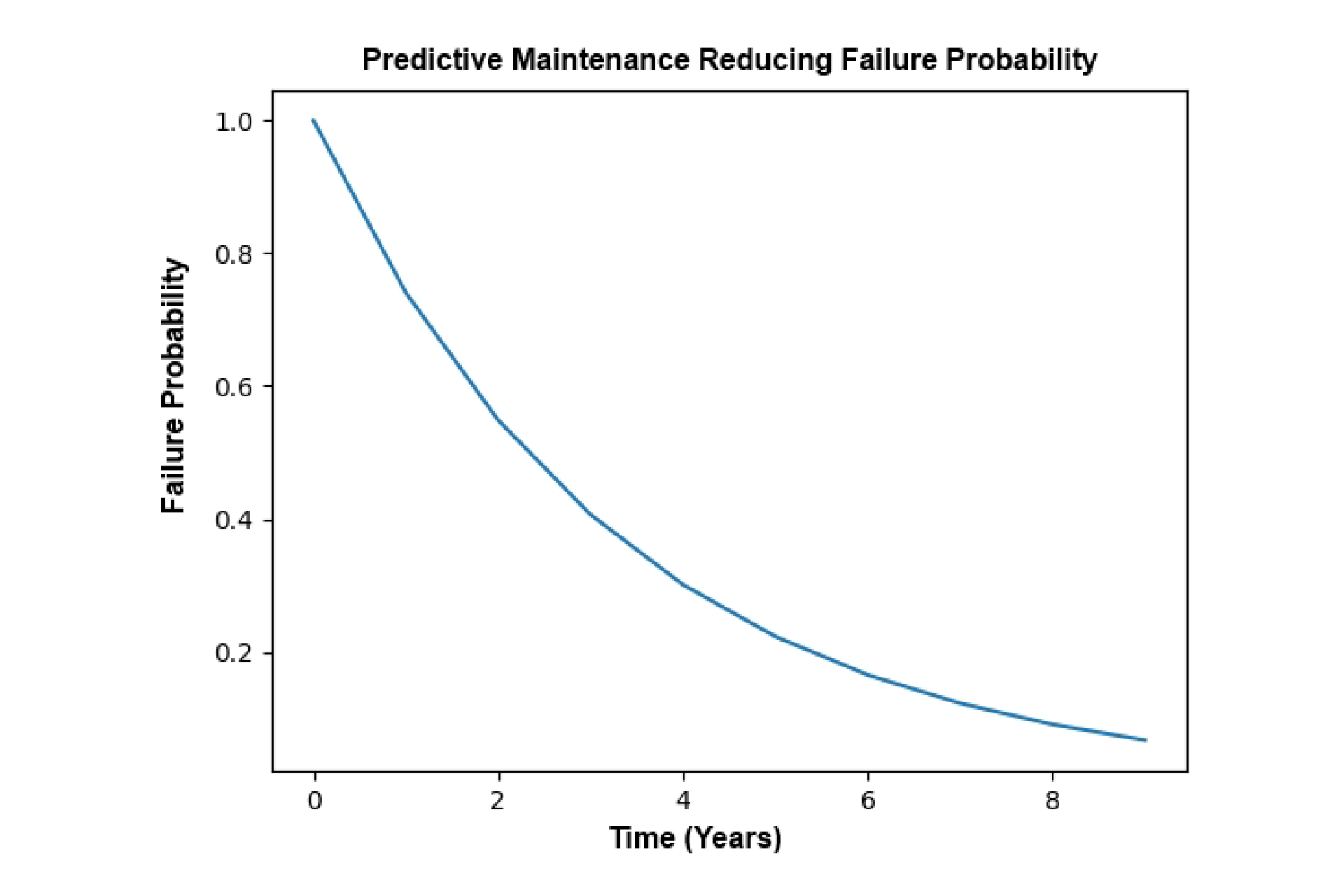
The graph demonstrates how condition-based monitoring and early intervention significantly enhance system reliability and extend operational life, enabling:
- Reduced downtime through early fault detection.
- Lower maintenance costs by preventing major failures.
- Improved reliability via continuous monitoring.
- Extended equipment life, supporting sustainable operation.
In essence, predictive maintenance transforms hydraulic systems into intelligent, self-aware assets, aligning reliability engineering with the broader goals of efficiency and sustainability.
Applications in Mobile Machinery
- Hydraulic Excavators
In excavators, AI enables:
- Optimized motion trajectories.
- Reduced idle energy consumption.
- Efficient coordination of multiple actuators.
Energy recuperation during cyclic operations further enhances efficiency.
- Underground Mining Machinery
Mining environments demand high reliability. AI-integrated systems:
- Predict component failures.
- Optimize hydraulic circuit performance.
- Improve safety in harsh conditions.
- Autonomous Machinery
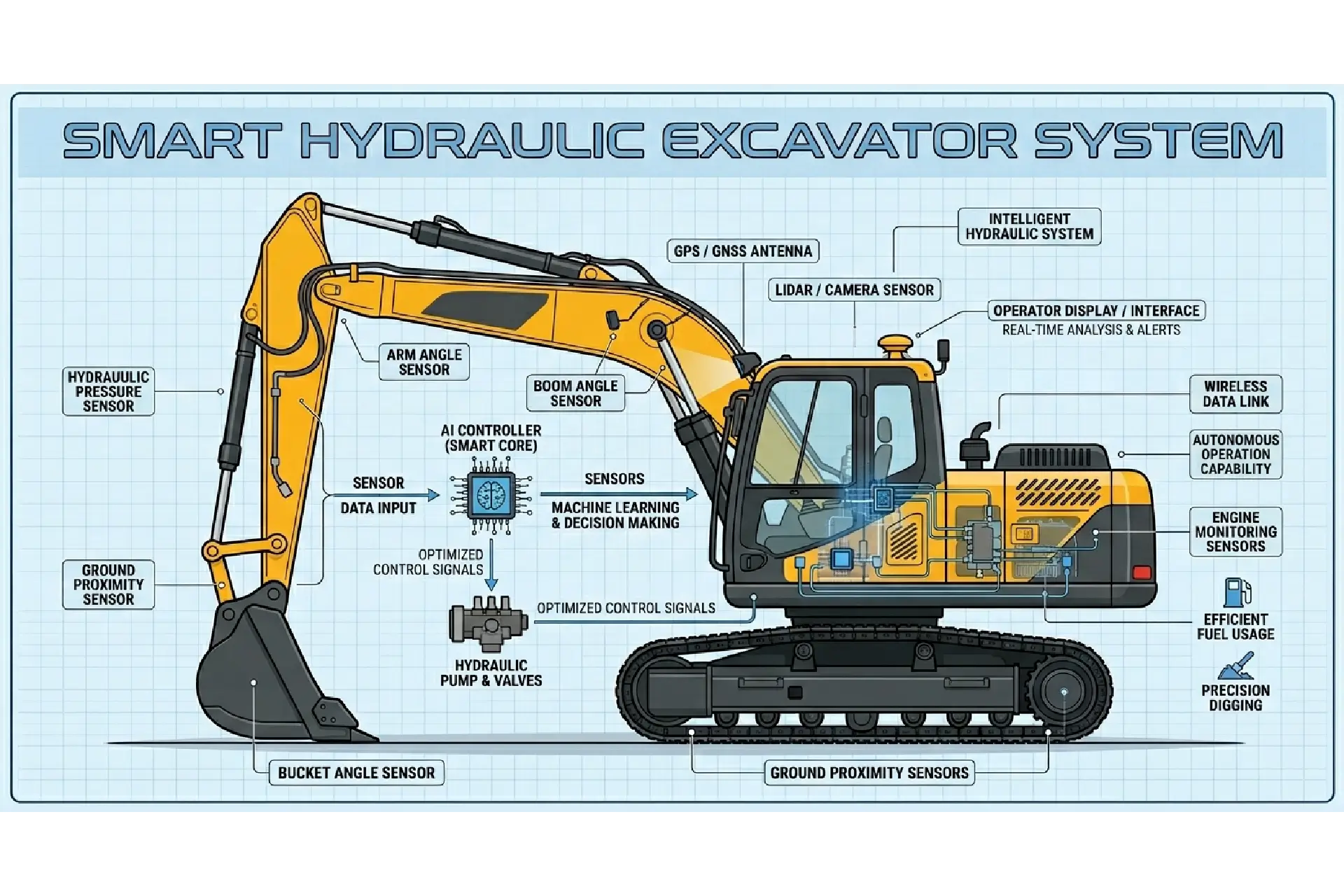
AI-driven hydraulics are essential for autonomous systems, where precise control and real-time decision-making are critical. A conceptual overview of a smart hydraulic excavator system, integrating sensors, AI-based control, and real-time decision-making for autonomous operation, is presented in Fig. 8.
Tribology and Smart Lubrication
Lubrication plays a critical role in the performance and longevity of hydraulic systems.
AI-enabled lubrication systems monitor oil quality in real time, detecting contamination, viscosity changes, and degradation. This ensures optimal lubrication, reduces wear, and minimizes environmental impact.
The adoption of biodegradable hydraulic fluids further enhances sustainability.
Roadmap to Net Zero in Fluid Power Systems
Achieving Net Zero requires a holistic approach:
- Lifecycle Engineering: Designing for durability and recyclability.
- Electrification: Transition to electrically driven hydraulic systems.
- Digitalisation: Real-time monitoring and optimization.
- AI Integration: Intelligent control and predictive maintenance.
- Energy Recovery: Minimizing energy losses.
Challenges and Future Outlook
Despite the benefits, challenges remain:
- High initial implementation cost
- Integration with legacy systems
- Requirement of skilled workforce
However, advancements in edge AI, digital twins, and green hydraulics are expected to accelerate adoption.
Conclusion
The integration of AI and digitalisation into fluid power systems marks a transformative step toward sustainable engineering. Intelligent hydraulic systems not only enhance efficiency and reliability but also significantly reduce environmental impact.
For mobile machinery, where hydraulics play a central role, this transformation is essential for achieving Net Zero emissions and sustainable asset life. The future lies in systems that are not just powerful, but also intelligent, adaptive, and environmentally responsible.
References
[1] C. Eaton, “The impact of artificial intelligence on hydraulics and pneumatics,” Tidyco Blog, Oct. 22, 2024.[2] The future of mobile hydraulics is digital, Bosch Rexroth Corporation, 2024.
[3] Parker Hannifin Corporation, Today’s digital ecosystems take mobile hydraulic systems to a new level, 2024.
[4] A. Cao, “AI and machine learning in fluid power: Opportunities and challenges,” LinkedIn Article, Feb. 7, 2025.
[5] W. M. Ashraf, G. M. Uddin, R. Tariq, A. Ahmed, M. Farhan, M. A. Nazeer, R. U. Hassan, and V. Dua, “Artificial intelligence modeling-based optimization of an industrial-scale steam turbine for moving toward net-zero in the energy sector,” ACS Omega, 2023, doi: 10.1021/acsomega.3c01227.
[6] “AI-driven advancements in engineering systems,” ScienceDaily, Jul. 29, 2025.
[7] “Digital twin in fluid power: Review, uses and outlook,” International Research Journal of Modernization in Engineering Technology and Science (IRJMETS), 2024.
About the Author
Dr. Ajit Kumar is an Assistant Professor of Mechanical Engineering at IIT(ISM) Dhanbad, with over 13 years of academic and industry experience. He specializes in mining machinery and fluid power systems, leading the Power Hydraulics and Pneumatics Laboratory. He has published 70+ research papers, holds four patents, and has received several national awards, including the Er. M. P. Baya National Award and the Jharkhand Engineering Excellence Award.
Dr. Ajit Kumar
Assistant Professor, Department of Mechanical Engineering | IIT(ISM) Dhanbad | India