
Introduction
Today we see that asset-intensive organizations across sectors and industries, including their service providers, are striving to improve their operational performance and ultimately their business performance in all possible ways. Their efforts are compounded by the constantly changing external and internal contexts and increasing stakeholder requirements and expectations. In all this, the growing interest of organizations in asset management and digital technologies has provided them with a new window of opportunity for significant improvements in capabilities and performance for sustained realization of value from their assets.
While many organizations have made significant progress in adopting technologies for Condition-Based Maintenance (CBM) and Predictive Maintenance (PdM), including the application of AI/ML Technologies, many others prefer to adopt a cautious approach. However, in all cases, the long-term benefits and value for organizations are usually realized only when the implementation is based on the foundation of the right management system framework, its key elements, the related systems, processes, technologies, and the implementation is at scale.
In this regard, the development and implementation of an integrated asset maintenance strategy cycle encompassing various roles in operational management and functional management merits consideration. While maintenance work management is traditionally given attention, managing the asset maintenance strategy cycle in an optimal, integrated manner, and its digitalization is an opportunity for many. An effective and efficient asset maintenance strategy cycle delivers value, supports asset life cycle management, and supports asset management of organizations.
Integrated Asset Maintenance Strategy Cycle
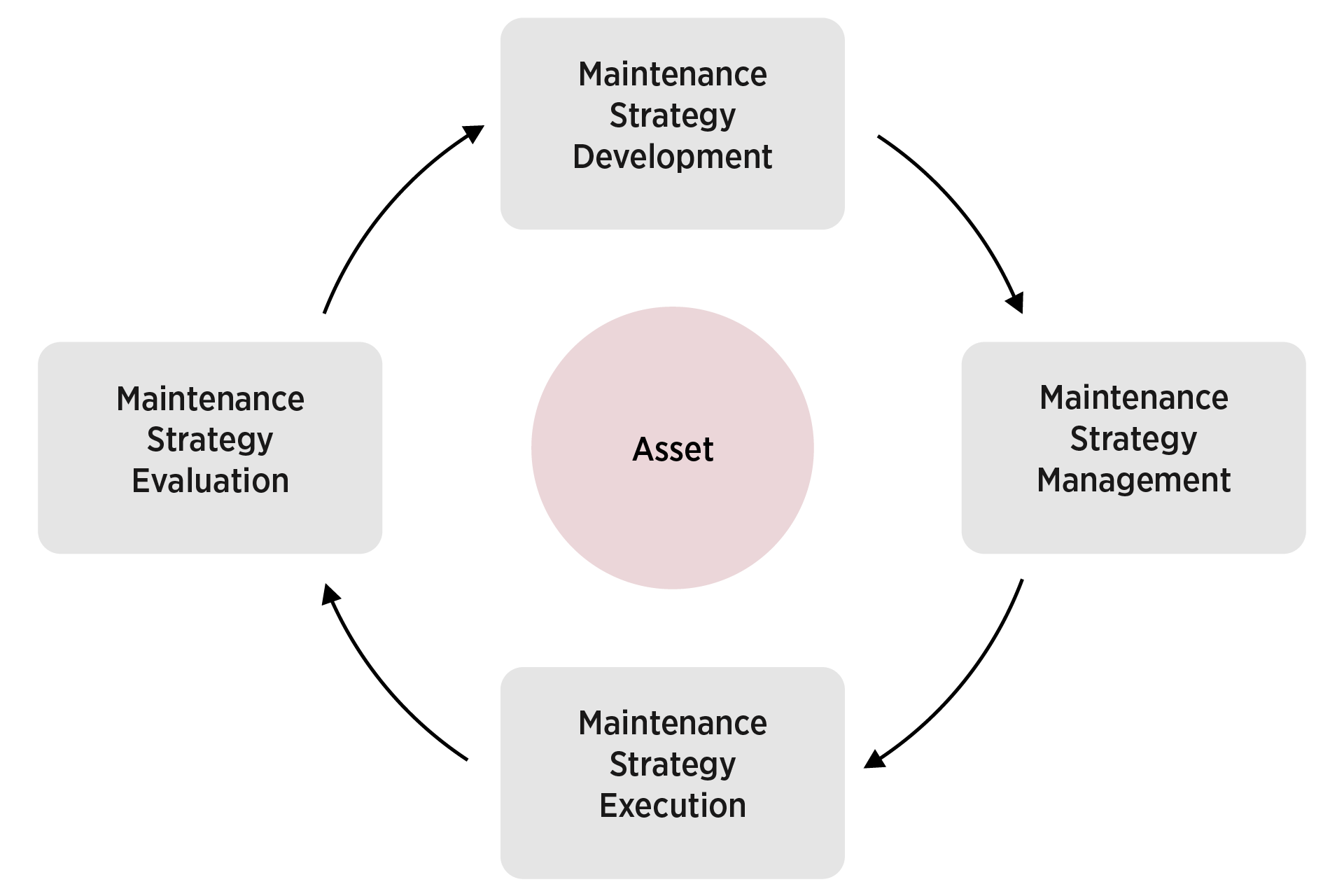
- Asset Maintenance Strategy Development: Organizations deploy physical assets for manufacturing a product or delivering a service, and these assets are designed, engineered, and constructed/installed for appropriate levels of safety, integrity, and reliability. Prior to or post their deployment in the operational phase, maintenance strategies are developed based on the understanding of their operating contexts, failure modes, and associated risks.
The question was never really whether we can build it. It is whether we can get people to use it. Answer that, and the rest is engineering.
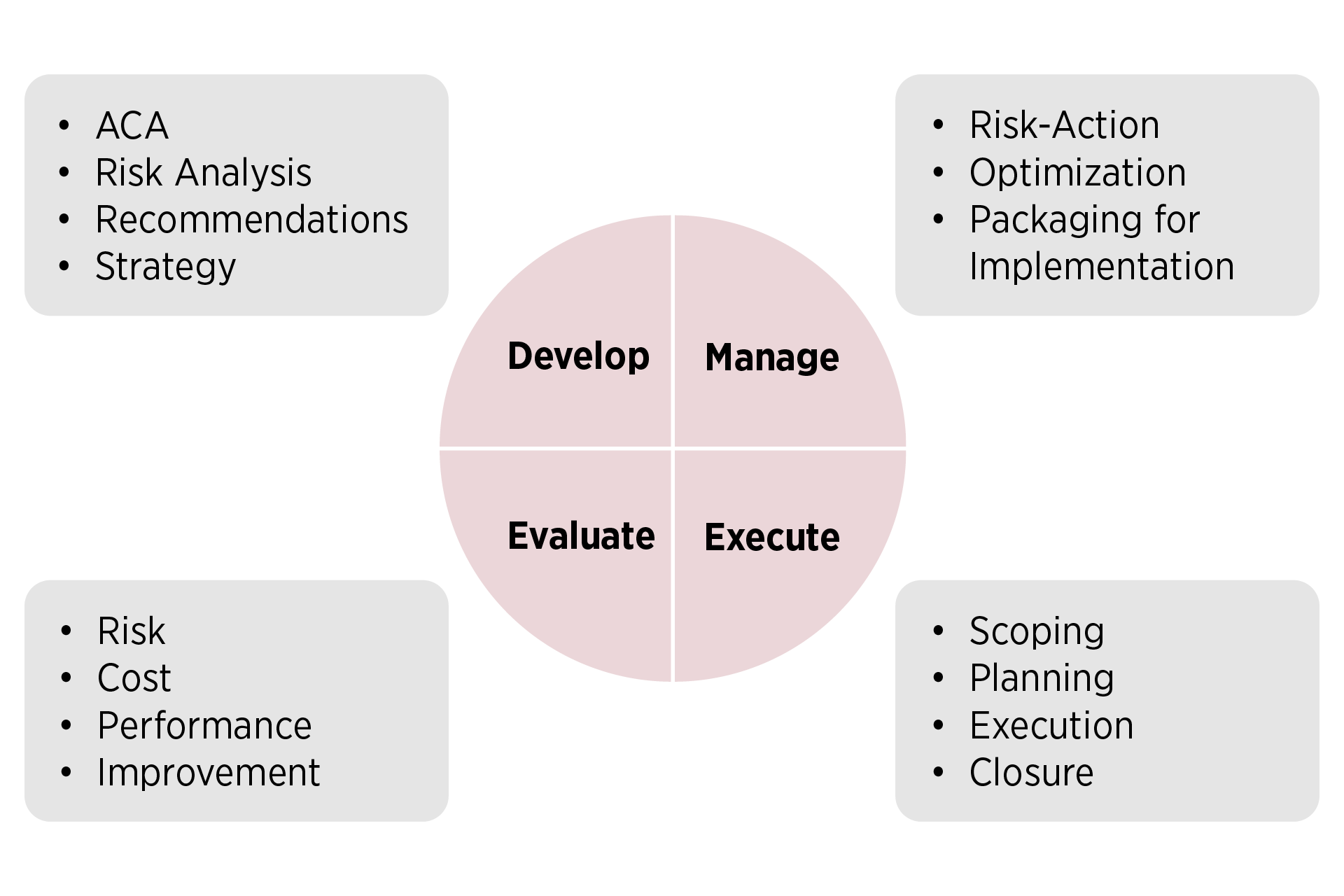
- High-Risk Assets: Depending on the industry and the asset classes, detailed asset risk analysis from the perspectives of safety [Safety Integrity Level (SIL) Analysis], loss of containment [Risk-Based Inspection (RBI) Analysis], and loss of function [Reliability Centered Maintenance (RCM) Analysis] and [Failure Mode and Effects Analysis (FMEA)], typically in that order, are carried out on high-risk asset systems. The aim is to determine the risks (e.g., functional failures and failure modes) and determine effective risk mitigation actions that would subsequently be converted into asset maintenance strategies.
- Medium-Risk Assets: Asset-specific maintenance strategies are developed based on FMEA/other risk-based approaches and other inputs for determining effective risk mitigation actions for the various risks.
- Low-Risk Assets: Maintenance strategies are developed based on a generic approach (e.g. templates) for the applicable asset classes based on various considerations and inputs. The maintenance strategy for such assets could, in select cases, include run-to-failure for assets where the consequences of failure are acceptable.
Based on the above approach, detailed risk-based maintenance strategies are developed for the asset systems, individual assets, and asset classes as appropriate. Maintenance strategies comprise Preventive Maintenance (PM) such as maintenance, testing, and inspection, which could be time-based, usage-based, etc.; Condition-Based Maintenance (CBM) based on vibration analysis, oil analysis, thermography, etc.; and Corrective Maintenance (CM), each of which has its own place and importance. In addition, Improvement Maintenance (IM) is selectively adopted where maintenance strategies cannot effectively mitigate the risks.
Leveraging CBM/PdM in Maintenance Strategies: With the advent of several effective online and offline asset condition/health monitoring techniques and solutions, CBM and PdM are playing an increasingly important, effective, and dominant role in the maintenance strategies of today’s organizations.
Even when appropriate risk-based maintenance strategies are developed and implemented for assets, they do, at the component level, randomly develop faults and experience failures in the operational (O&M) phase, the longest phase of their total life cycle. As can be seen from the conceptual bathtub curve below, component-level failures do occur in all three stages but are random in the normal/useful life stage (2), necessitating early detection of faults. Faults that are not timely detected, diagnosed, and acted upon lead to failure of the component.
- Asset Strategy Management: The asset maintenance strategies, tasks, and their operations for individual or group of assets are typically implemented in software solutions such as Enterprise Asset Management (EAM)/Computerized Maintenance Management System (CMMS). Depending on the solutions used for developing risk-based maintenance strategies, and their level of integration with EAM/CMMS, the maintenance strategies can be suitably packaged and implemented in them as maintenance items/plans in a seamless manner. Further asset strategies such as rounds for condition monitoring, lubrication, inspection, etc., and operator rounds are typically seen implemented in many disparate systems and software solutions.
However, the endeavour should be to provide a 360-degree (asset-centric) view of all strategies to users by suitably adopting Asset Performance Management (APM) or similar solutions that integrate with EAM/CMMS at the appropriate levels and support management and implementation of asset strategies. APM is a strategic approach for managing physical assets and helps an organization optimize the balance between costs, risks and performance for delivering life cycle value from assets. Capable of acquiring various asset condition/performance data and leveraging data analytics, APM plays an important role in the asset strategy cycle.
Maintenance planning converts the strategies into actions that can be executed on the assets. It acts as a crucial link between the reliability function (developing effective maintenance strategies) and the maintenance (efficiently executing maintenance strategies) functions of an organization. By proper packaging and optimal implementation of the tasks and operations of the risk-based maintenance strategies in the appropriate solutions, planning and scheduling of the tasks for timely execution, etc., their timely and efficient execution is possible.
- Asset Strategy Execution: Although maintenance strategies are developed and implemented for assets with the best intentions (balancing the risks, costs and performance), their execution on the assets (as planned work/tasks, through maintenance notifications/work orders) is where the rubber meets the road. Effective maintenance strategies, when efficiently executed, deliver the required performance for the organization.
Apart from the PM tasks (e.g., preventive maintenance, testing, inspection, calibration) and occasional CM tasks (planned corrective maintenance), we are aware that CBM/PdM is today a major maintenance strategy in any proactive maintenance management. There is an immense interest in deploying a variety of CBM/PdM techniques and technology solutions on a variety of assets based on online and offline monitoring. The plethora of sensors that are available and have become more affordable today, supported by several condition monitoring, detection, diagnosis, and prognosis solutions, is equipping organizations with never-before-seen capabilities for CBM and PdM (refer to Fig.4 below).
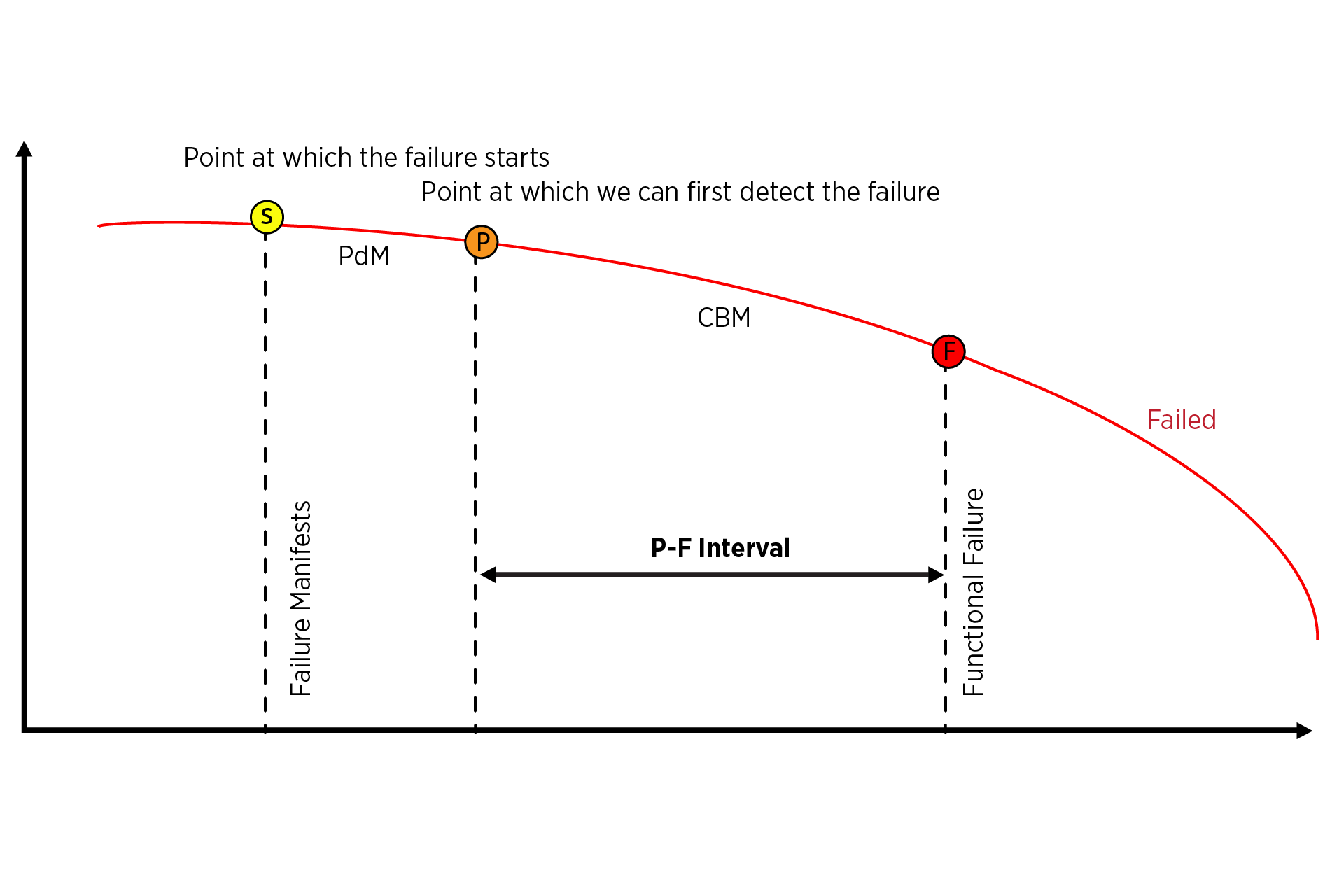
However, it is essential that such deployment is part of the larger asset condition management (ACM), along with asset performance management (APM) based on the maintenance, reliability, and asset management system of the organization.
ACM, together with APM (often termed as ACPM), is enabling organizations to better determine their asset health and manage it by taking effective and timely maintenance actions.
This brings into focus maintenance work management, including prioritizing, planning, scheduling, execution, and close-out of the variety of maintenance work (PM, CBM/PdM, CM) on assets and asset systems. Routine maintenance and turnaround maintenance, as applicable, are performed on assets, focusing on the quality and efficiency of execution. This is also a stage where lots of asset data (e.g., condition data, inspection data, calibration data) are collected, stored, and analysed to determine any maintenance needs (CBM).
It is also essential that maintenance work execution provides quality, complete, and timely feedback on aspects of work (strategy) execution, e.g., work completion, asset condition/inspection data, cost data, failure data, catalogued codes.
- Asset Strategy Evaluation: The maintenance work history and asset condition feeds into asset strategy evaluation for continuous improvement (P-D-C-A approach) of the risk-based asset strategies developed earlier. Asset strategy evaluation comprises analysing the historical asset data (results of asset strategy execution) along with the costs of strategy execution and risks (e.g. fault and failure data), current asset condition and condition assessment for determining the effectiveness of the maintenance strategies for any improvement needs. In the era of technology, relevant asset condition data and the related faults identified at various stages of their severity (manifestation of faults to actual failure) are very useful indicators of the effectiveness of maintenance strategies.
Strategy evaluation could also include the application of various data analytical tools for evaluation of asset performance in a given time period and the effectiveness of the associated asset strategies. Towards this, specific reliability performance measures (e.g. availability, MTBF/failure rate), data analysis, and statistical analysis are carried out on the historical data to determine the need for and the specific modifications to be made in the current maintenance strategies.
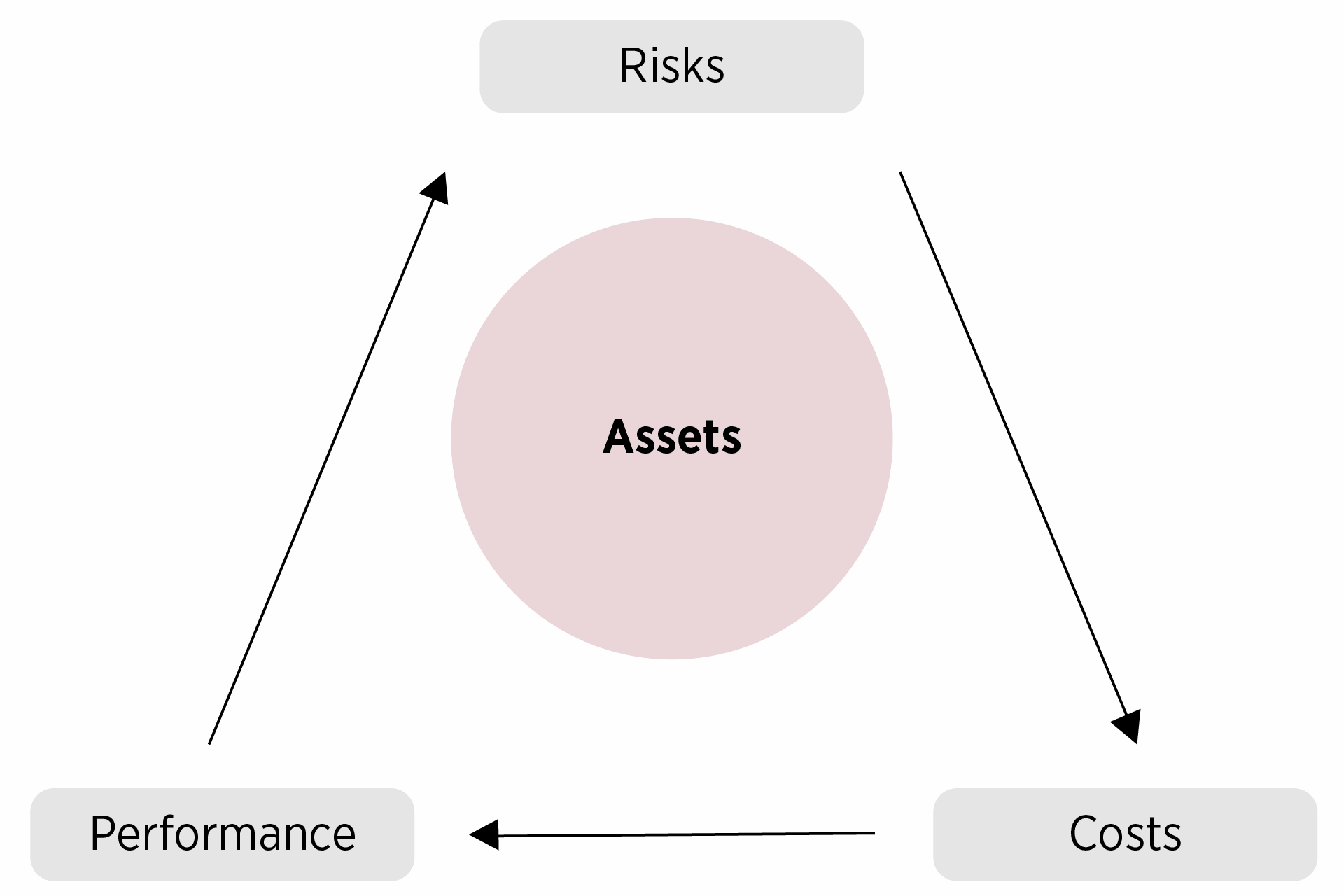
Asset strategy evaluation feeds into the strategy development with results of the analysis and evaluation and the related recommendations for determining the specific modification/improvement of the asset maintenance strategies, and the P-D-C-A cycle continues for every asset covered in the application of the maintenance strategy.
Managing the Asset Strategy Cycle-Business Critical Role of CBM/PdM
- Dynamic Risks and Flexible Asset Strategies: With the current advancements in sensors and technology for acquisition and processing of several asset condition data, closer-to-real-time condition monitoring and PdM is a capability available for organizations. Continuous condition monitoring and continuous PdM of assets are possible scenarios in the future. Asset condition combined with asset performance (e.g. asset health index/score) enables organizations to monitor and manage asset health and the associated risks (Ref. Fig. 8 below), which are also becoming dynamic in nature, aligned with their operational risks and business risks.
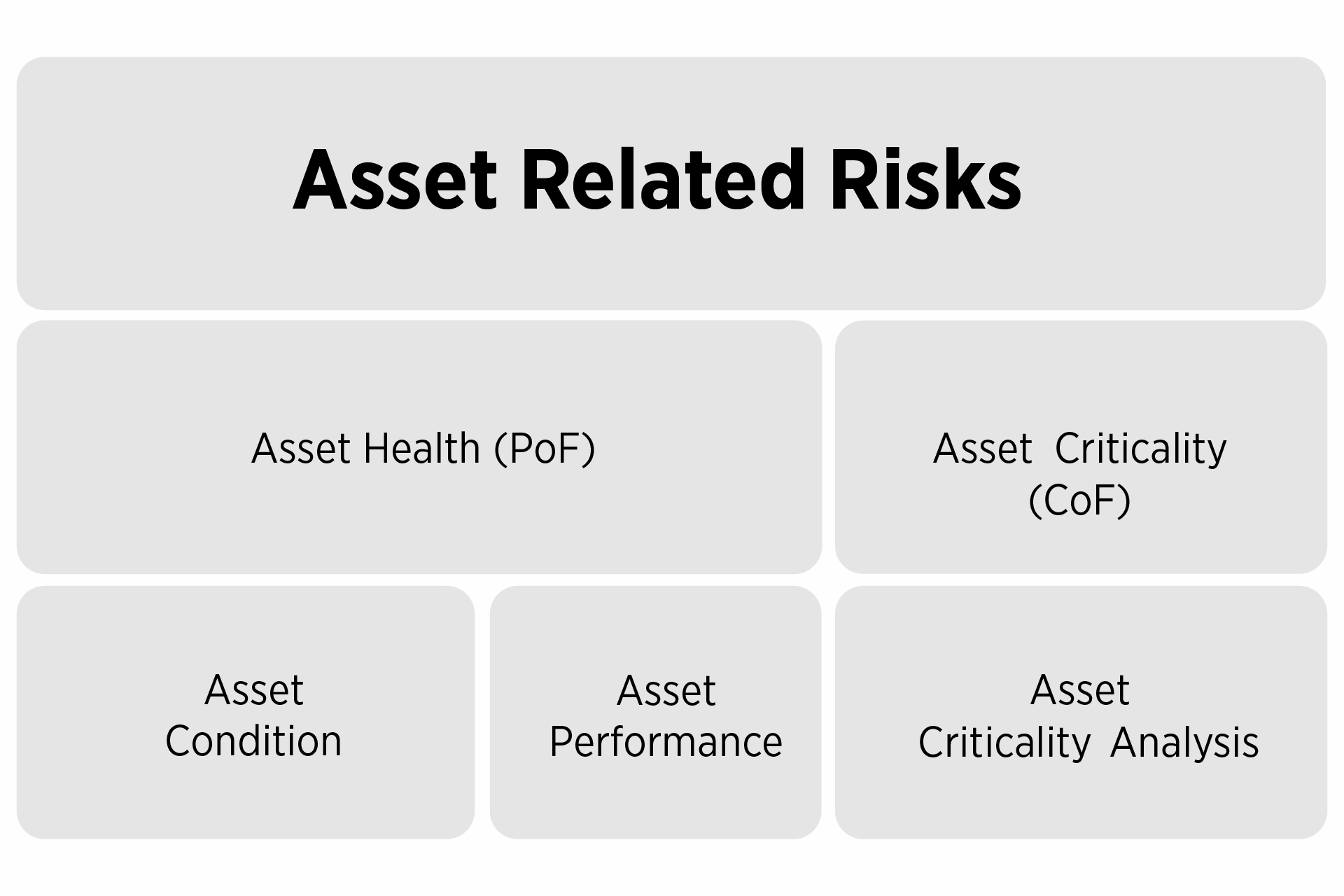
With effective asset health management and the resultant dynamic risk management (w.r.t. assets), today, asset maintenance strategies are becoming flexible and intelligent. While they are still important, schedules for many PM Work would be subject to adjustments, to an extent, influenced by asset condition/health that reflects the current risks, scoped for appropriate mitigation actions, planned, scheduled, and executed accordingly. As we move towards a larger share of CBM/PdM (through effective and affordable online and offline monitoring, anomaly detection, fault detection, diagnosis and prognosis of assets), condition-based and planned corrective maintenance are emerging to have a significantly greater role and share in our maintenance strategies. It is also imperative that all such proactive work is planned, scheduled and executed at the right time and in the right manner.
This calls for an asset strategy cycle (includes maintenance and operation-owned strategies) that is focused on both effectiveness (e.g. focused on identification of risks and determining the right mitigation actions) and efficiency (focused on right execution of risk mitigation actions). It is also necessary that the asset strategy cycle (in terms of systems, processes, technology and data) is optimally integrated and sufficiently digitalized for seamless flow of data and information for right decision-making at all stages.
From the perspective of risk management, the asset strategy cycle could be considered as a dynamic risk management cycle, from risk identification to risk mitigation on an ongoing basis. Towards this, reliability, condition monitoring, planning, maintenance, and operations functions need to be proactive to the needs of assets, keeping the focus on the known and emerging risks and effective mitigation actions at any given time. The ideal goal of organizations would be to carry out maintenance on demand (based on real time/closer to real time risks).
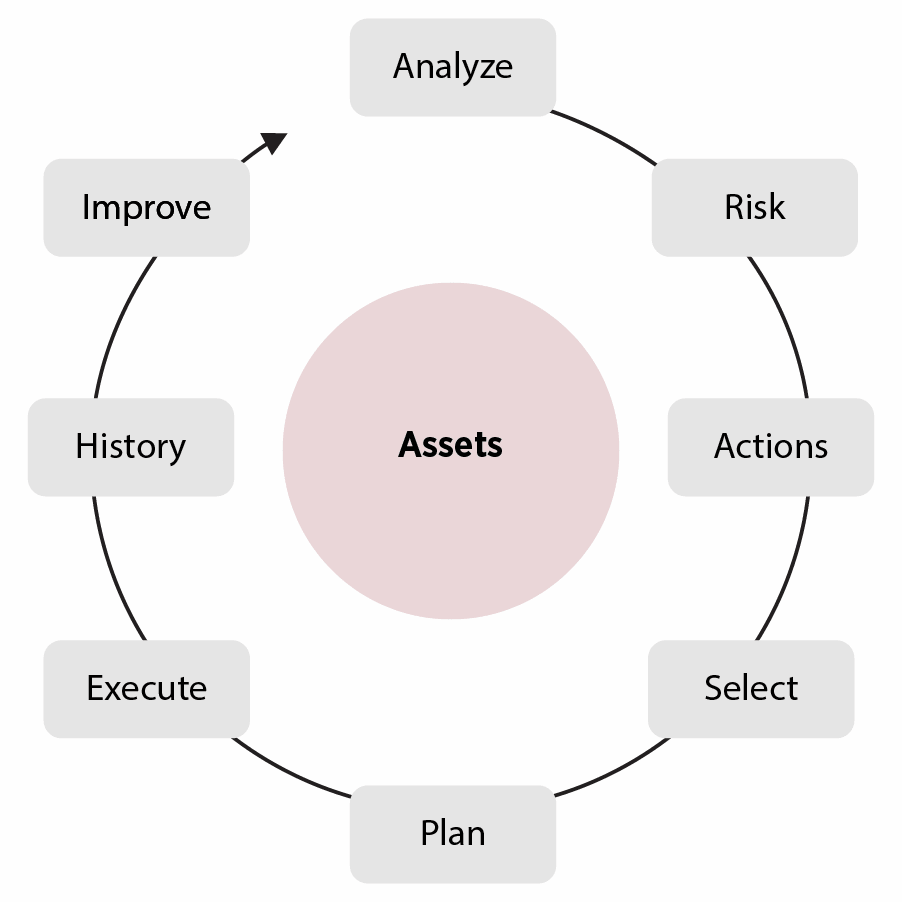
- Need for integration of Asset Facing Functions: In the above scenario, there is a greater need for convergence of reliability, condition monitoring, planning, maintenance and operations functions of an organization. The arrival of Industry 4.0 has only accelerated the need for this convergence, with the optimum level of integration between these functions, the management systems, people, business processes, and software solutions/technologies that support them, to timely determine the various risk-based tasks and efficiently execute them, focused on value.
Maintenance work management needs to play a key role in the integrated asset strategy cycle, going beyond its traditional domains. Maintenance planning has a pivotal role in this integration, being dynamic and proactive, in converting the intent of dynamic/flexible maintenance strategies into maintenance actions. The focus of all functions needs to be on asset performance, costs, and risks for realizing value from the assets. Adopting the practices for risk-based work selection & prioritization, planning and scheduling, quality execution, and feedback is the need in this regard.
As the industry advances in its adoption of technology for predictive/prescriptive maintenance, it needs to equally focus on and keep pace in all other related areas, for an effective and efficient asset strategy cycle, towards the goal of right maintenance work execution at the right time. Any digitalization and technology adoption would need to take a holistic approach based on a robust management system, key capabilities across functions, people, processes, data, the right technology solutions, and a sound road map for digitalization.
With high stakes involved, an organization needs to get the basics right at all stages, at all levels, and do it right the first time, involving the right stakeholders at all stages. All the functions that are part of the integrated asset strategy cycle (e.g., reliability, condition monitoring, planning, maintenance and operation) need to be innovative, agile, and speak the same language of risk, actions, performance and value and, more importantly, function as one team well-orchestrated by the organizational leadership.
About the Author
N. P. Sundar is a Mechanical Engineer, Chartered Engineer and Certified Maintenance & Reliability Professional with 43 years of industry and consulting experience. His expertise spans Asset Integrity, Reliability, Maintenance, Operations, Digital Transformation and Process Safety. He had held leadership roles at RIL and IPCL and currently provides his independent assessment, consulting, and training services. He also contributes in development of ISO Asset Management standards.
Mr. N.P. Sundar
Independent Consultant | Stellar Innostrat Consulting | India