In the heavy-duty environments I visit, whether it’s a remote mine site or a large-scale agricultural operation, this "friction tax" is a daily reality that translates directly into avoidable carbon emissions and massive material waste. If we are serious about achieving a truly sustainable asset life, we must look deeper than the fuel tank; we must move beyond the boundaries of traditional lubrication.
The Mechanics of Sustainability: Wear vs. Material Conservation
Sustainability in maintenance is often defined by the "Three Rs": Reduce, Reuse, and Recycle. However, in the high-stakes world of industrial reliability, we must prioritize a fourth: Retain. From a technical standpoint, retaining the original surface integrity of a component is the most direct and effective way to lower an operation's carbon footprint.
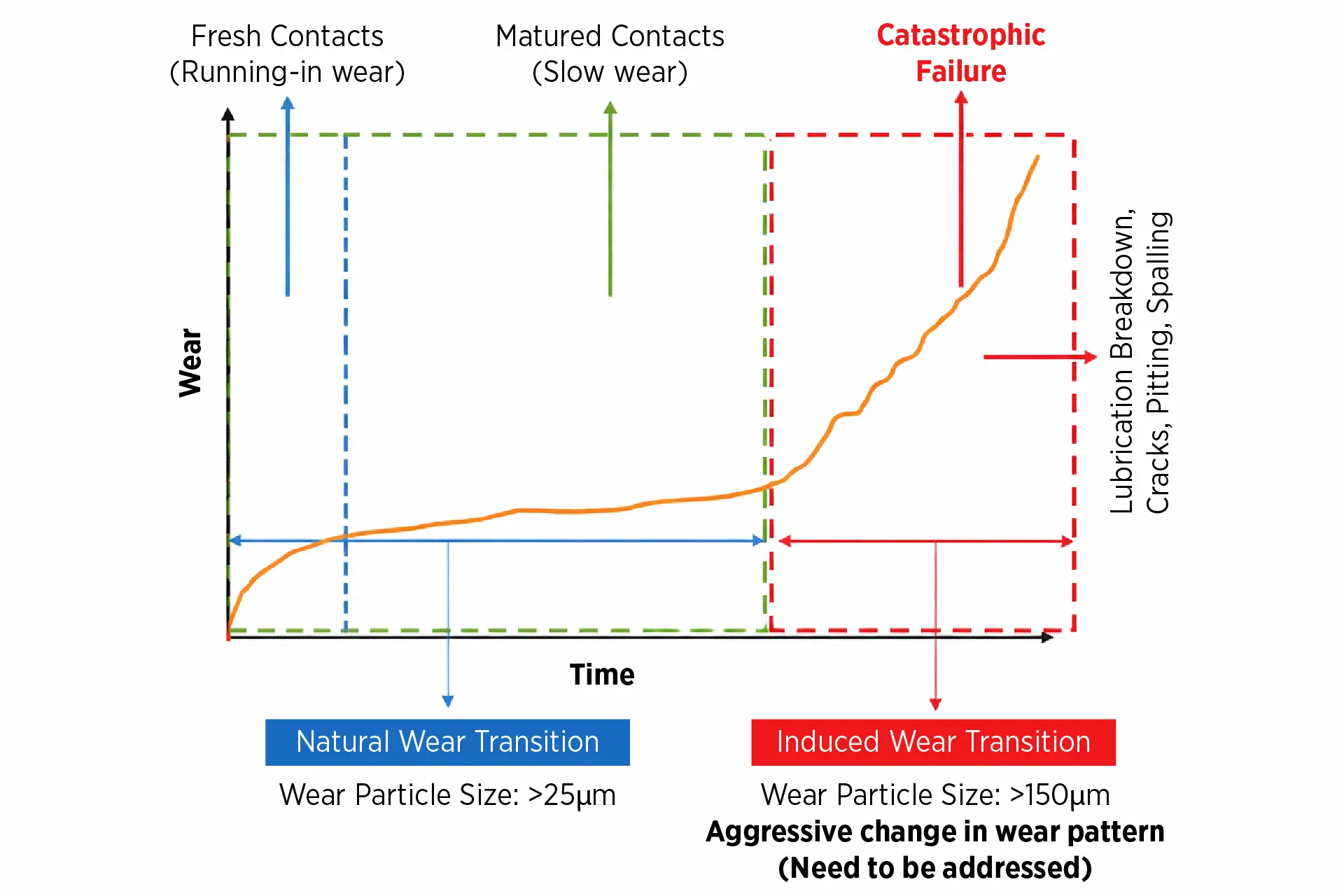
The most reliable indicator of whether we are succeeding in this "retention" is the data found in our oil samples; specifically, the size and frequency of wear particles generated within the system. Analysis frequently shows that while natural wear transitions typically produce manageable particles smaller than 25μm, the moment lubrication breaks down or pitting occurs, we see a spike into "induced" wear transitions with particles exceeding 150μm. To me, every micron of metal identified in a sample isn't just a technical data point; it represents the energy and resources spent on manufacturing a part that is now being ground into waste.
Nanotechnology: A Paradigm Shift in Lubrication
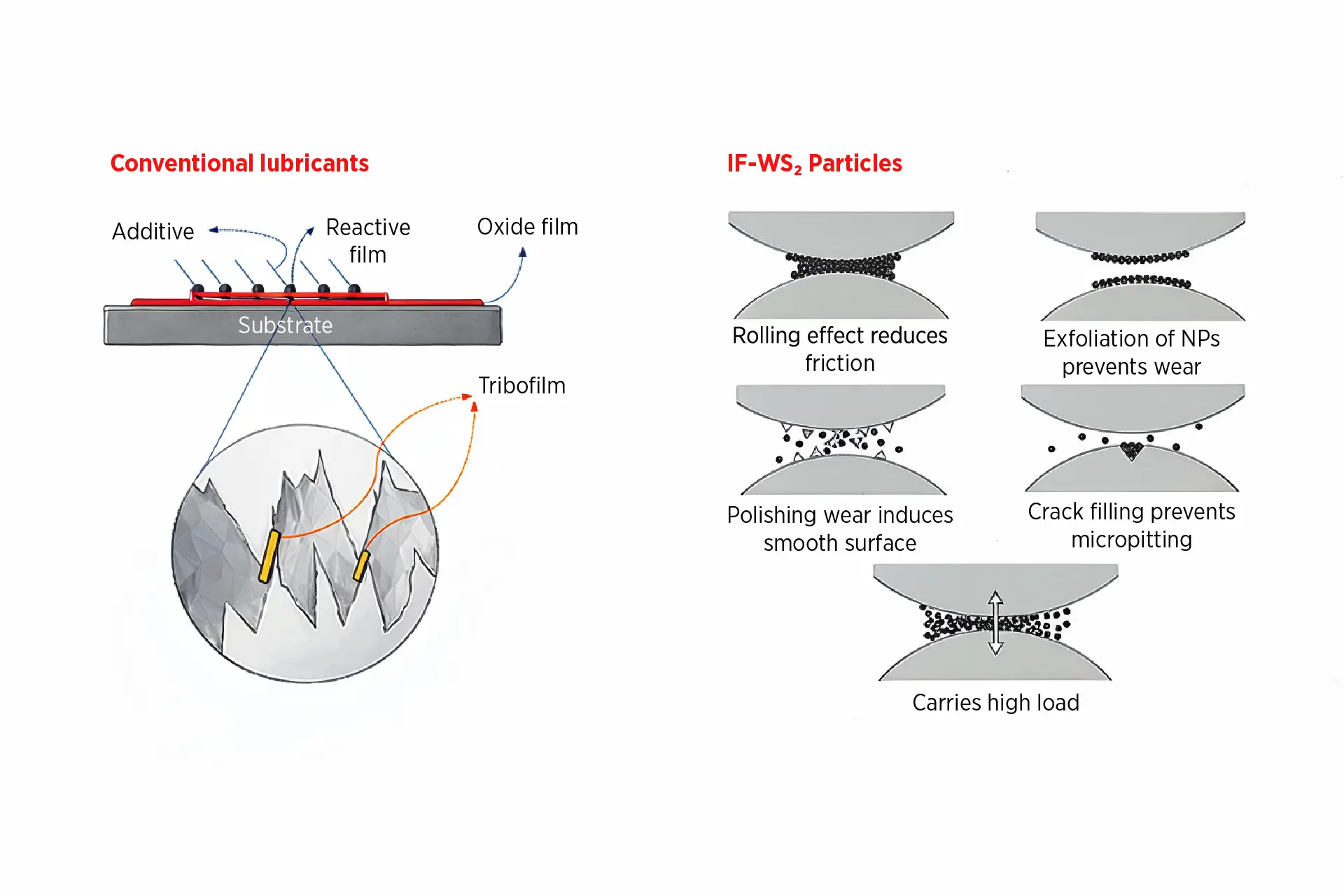
In my experience, we’ve reached a point where traditional lubricants, which rely on viscosity and standard chemical additives like ZDDP, simply can’t keep up with the extreme pressures of modern machinery. During my PhD, when I was developing anti-micropitting gear oil lubricants, I often saw these chemical films fail under higher load, leading to boundary conditions where metal-on-metal contact becomes a costly inevitability.
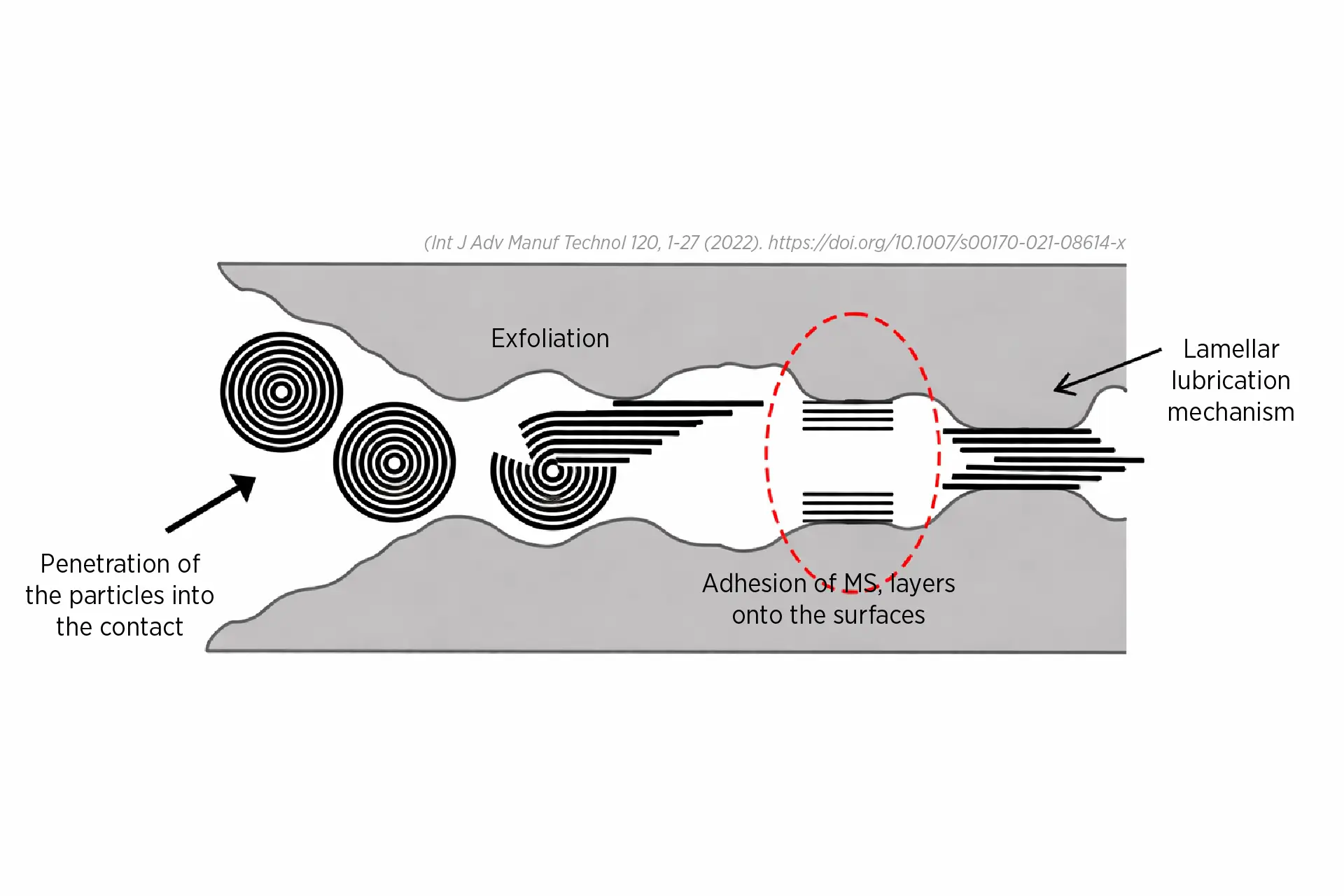
This is why I find the transition to Inorganic Fullerene Tungsten Disulphide (IF-WS2) so compelling. While metallic tungsten is famous for its rigid hardness, it undergoes a "functional metamorphosis" when synthesized at the nanoscale. In this nano-form, the material shifts from a rigid barrier to a dynamic, "onion-skin" lubricant. It creates a unique materials science paradox that I find fascinating: we are using the chemistry of one of the world's hardest metals to create a surface so slick it virtually eliminates friction. By functioning as microscopic ball bearings, these nanoparticles allow us to transform destructive sliding friction into rolling friction, creating a self-repairing film exactly where the machinery needs it most.
Technical Superiority over Conventional Additives
The most striking advantage of IF-WS2 over traditional MoS2 is rooted in its unique spherical geometry. While I often see MoS2 requiring high treat levels between 3% and 8%, IF-WS2 delivers superior surface protection at just 0.1% to 3%. One specific challenge I frequently encounter is that, at the high-pressure zones, standard chemical films are often too thin to prevent contact between surface peaks. However, the spherical IF-WS2 nanoparticles are capable of penetrating these contact points, acting as microscopic ball bearings that roll between the asperities to prevent direct metal-on-metal collision.
The technical benchmarks I rely on show that IF-WS2 can drop the coefficient of friction to below 0.03 while withstanding extreme loads up to 400,000 psi (NIS, USA). One of the most critical factors for the heavy industries I support is thermal stability; IF-WS2 remains stable up to 650°C, which significantly outperforms the 400°C limit where MoS2 typically fails. Furthermore, unlike the metallic additives that I frequently see contributing to sulphated ash and DPF clogging, these inorganic nanoparticles protect surfaces through physical mechanisms rather than chemical combustion. This makes them, in my view, the ideal candidate for modern "Low-SAPS" applications where both engine longevity and emission compliance are non-negotiable.
Field Validation and Data Analysis
The theoretical benefits are confirmed by rigorous field data:
- Mining (Indonesia): In trials involving Komatsu OHT dump trucks, IF-WS₂ resulted in a 67% reduction in Iron (Fe) wear generation, with levels dropping from 0.03mg/l/oil hr to a remarkable 0.01mg/l/oil hr.
- Agriculture (Australia): On a 1,500-hectare irrigation property, treatment of a gearbox led to a dramatic drop in operating temperature, moving the asset from extreme thermal stress to safe manual contact levels.
- Industrial Drives (Australia): Monitoring showed a temperature drop from 74.5°C to 54.5°C and an electrical current reduction from 30.5amp to 28.5amp, representing a 6% direct energy saving. This allowed for a 300% extension in oil life, moving drain intervals from 6 to 24 months.
Overcoming the "Newcomer" Challenge in Green Tech
In my view, the industrial transition from legacy standards like ZDDP and MoS2 to advanced IF-WS₂ represents more than just a new additive; it is a fundamental shift from chemical reliance to physical surface engineering. I have seen firsthand how traditional additives hit performance ceilings, limited by thermal decomposition and increasingly strict environmental regulations. Nanotechnology offers the disruptive path we need by providing a stable, "rolling" mechanical interface that remains effective exactly where chemical films fail. For the rail, mining, and agricultural sectors I support, adopting this innovation is the key to breaking through current reliability barriers.
Ultimately, the roadmap to a sustainable asset life is built at the microscopic level. By leveraging these mechanical advantages, I believe industries can achieve the dramatic reductions in energy consumption and material waste required for a greener future. The integration of IF-WS₂ technology, supported by the rigorous condition monitoring we perform daily, proves that reliability and sustainability are two sides of the same coin. As we move toward 2050, our goal as maintenance professionals should be clear: to eliminate the "friction tax" and ensure every industrial asset achieves its longest, most efficient life possible.
About the Author
Dr. Gopal Kumar is a Mechanical Engineer with a Master’s in CAD/CAM from VIT University, India, and a PhD in tribology and lubricants from Deakin University, Australia. Currently overseeing Australian operations for Techenomics Australia Pty Ltd, he specializes in tribology and lubrication reliability. A member of the Tribology Society of India, he is highly active within the rail, mining, and agriculture sectors. He focuses on improving asset reliability through comprehensive oil condition monitoring, advanced data analysis, and lubrication practices.
Dr. Gopal Kumar
Head of Australian Operations | Techenomics Australia Pty Ltd | Australia